

 13th Jul 2026
 166
166 indeed
3rd Aug 2026
Disposable Vape Buying Guide: Features & Quality Tips

Best Disposable Vape for Wholesale Buyers Guide
As a Disposable vapes have surged in global popularity because they offer an uncompromised blend of convenience, zero-maintenance operation, and immediate accessibility. For beginners transitioning away from traditional smoking or experienced vapers looking for a reliable backup, these pocket-sized systems bypass the learning curves of manual building and refilling.
However, the hardware market has evolved into a hyper-competitive space. Not all devices are built to the same standard. Poor structural sealing leads to sticky leaks, low-tier battery management causes power drop-offs, and unrefined coils can deliver a burnt taste before the e-liquid is even halfway empty.
This comprehensive disposable vape buying guide breaks down the essential hardware metrics, internal quality checks, and performance indicators you must evaluate to protect your investment and elevate your daily experience.
The 2026 Disposable Vape Selection Matrix
| Core Feature Profile | Baseline Standard | Premium Smart Tech Standard | Why It Matters |
|---|---|---|---|
| Puff Lifespan | 5,000 – 10,000 Puffs | 20,000 – 50,000+ Puffs (Dual-Tank / Modular) | Determines total device longevity. |
| Coil Architecture | Standard Single Wire/Mesh | Smart Dual-Mesh (Alternating / Boost) | Prevents flavor degradation over time. |
| User Interface | Single Static LED Indicator | 270° 3D Curved Smart Screens | Tracks precise E-liquid and Battery percentages. |
| Airflow Control | Fixed Tight Draw | Stepless Sliding Mechanical Airflow | Customizes restriction from MTL to RDL. |
| Eco Integrity | Entire Device Disposal | Modular Reusable Battery Docking | Significantly reduces environmental lithium waste. |
Important Disposable Vape Features to Check
When evaluating a new device, look beyond the color of the outer chassis. The internal architecture determines the quality of your drawing.
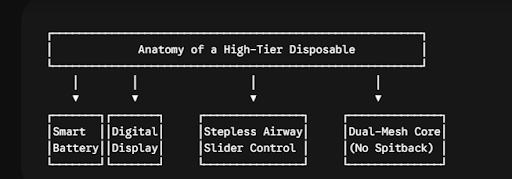
Modern high-performance disposable platforms focus heavily on user control. A premium hardware setup must balance ergonomic shell design with stable mechanical operation. Always look for these specific system benchmarks:
- Stepless Airflow Control: A structural sliding lever on the base allows you to fine-tune your inhalation style, shifting effortlessly between a restrictive Mouth-to-Lung (MTL) draw and an open Restricted Direct-Lung (RDL) hit.
- Smart Display Interfaces: Advanced options have moved past primitive blinking lights. Look for high-visibility digital screens that clearly display remaining battery percentages and exact fluid levels.
- Dual-Coil Activation Modes: Top-tier platforms now feature multi-tier wattage switching (e.g., Soft vs. Boost modes), giving you the choice to save e-liquid or increase power output for bigger clouds.
Understanding Disposable Vape Battery Life
A device’s total puff longevity is fundamentally tied to its energy reserve management. If a non-rechargeable vape has a small battery capacity, it will often completely die out while usable e-liquid remains trapped in the internal cotton reservoir.
For this reason, the industry has universally shifted toward rechargeable disposable systems powered by Type-C fast-charging ports.
- The Power Balancing Act: A larger internal battery capacity (measured in milliampere-hours, or mAh) sustains consistent firing power. When voltage drops in un-optimized systems, flavor reproduction becomes weak and wispy.
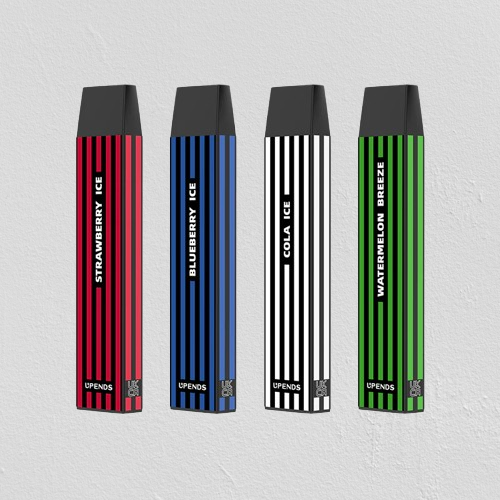
Premium engineering setups, such as the smart power distribution found across the UPENDS high-capacity disposable vape collection, utilize optimized integrated chipsets. These control circuits ensure that whether your battery is at 100% or 10%, the device outputs an identical, regulated voltage to the heating element so your first draw tastes exactly like your last.
How to Verify Authentic Hardware Quality
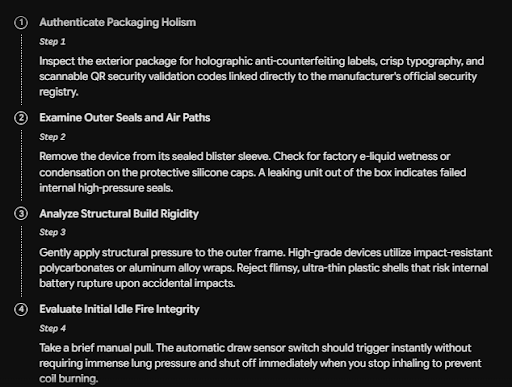
With millions of counterfeit devices saturating online retail marketplaces, running explicit, structural quality checks before loading up your device is paramount to user safety.
To separate high-end manufacturing from low-tier clones, implement this step-by-step physical inspection checklist:
Navigating Modern Puff Counts: High-Capacity Lifespans
The metrics defining standard puff lifespan categories have expanded drastically. Consumers no longer accept small-capacity items that run dry after 48 hours.
To determine what size suits your daily schedule, map your usage habits to these modern capacity categories:
Compact Disposables (Up to 5,000 Puffs)
- Best For: Casual social vapers, short travel weekends, and minimalist pocket space.
- Hardware Profile: Small, non-rechargeable footprint or ultra-compact internal batteries meant for rapid turnover.
Mid-Tier Powerhouses (10,000 to 20,000 Puffs)
- Best For: Regular daily users demanding long-lasting flavor stability without constantly carrying spare devices.
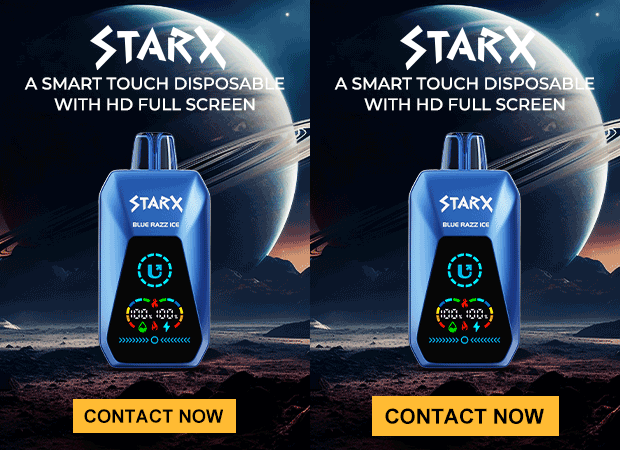
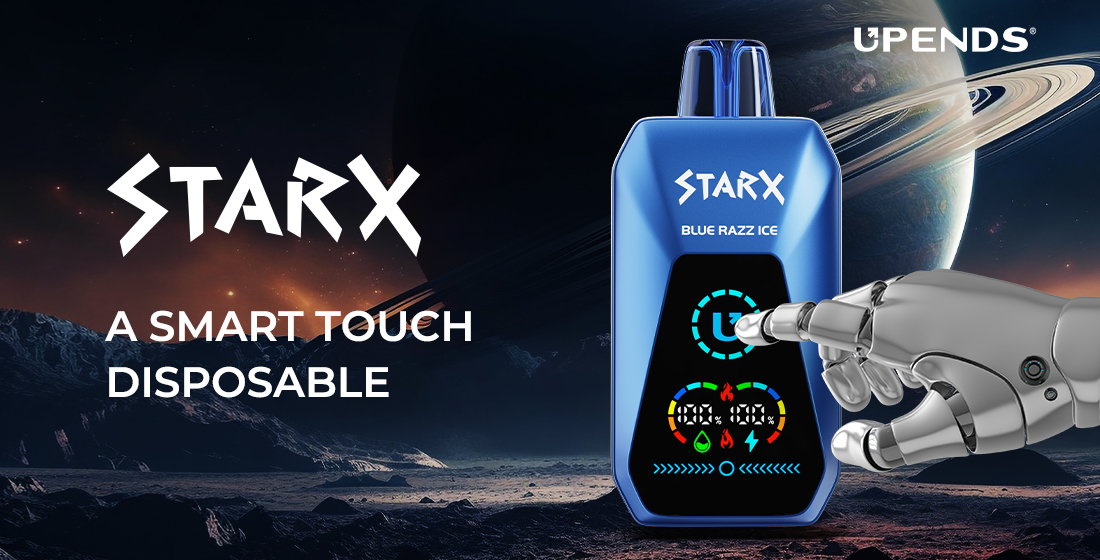
- Hardware Profile: Usually incorporates smart single mesh networks, simple liquid tracking LEDs, and Type-C rechargeable bays. Devices like the STARX S20000 fall perfectly into this category, using smart screens to manage large fluid reserves cleanly.
Extended Eco-Generation Systems (30,000 to 50,000+ Puffs)
- Best For: Heavy users, heavy eco-conscious vapers, and maximum long-term value.
- Hardware Profile: Features ultra-advanced dual-tank fluid isolation systems or innovative modular structural builds. For instance, the groundbreaking UPENDS UP9 50K utilizes a reusable rechargeable power bank matrix docked to swappable, high-volume disposable flavor pod cores. This structural design drastically minimizes the volume of discarded heavy lithium cells entering public landfills.
Achieving Flavor Consistency Without Coil Degradation
The final pillar of premium disposable vape quality is sustained flavor purity. Lesser-grade systems suffer from "flavor fade," a frustrating phenomenon where the heating material degrades rapidly, resulting in a dull, muted, or burnt taste long before the e-liquid is depleted.
To prevent this issue, manufacturers have transitioned away from old-style hand-wound wire coils toward advanced automated mesh grids.
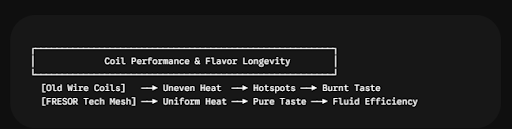
By assembling ultra-flat mesh layers with medical-grade organic cotton inside micro-automated cleanrooms, proprietary platforms completely eradicate manual manufacturing variances. This uniform heating grid distributes energy perfectly across the atomization chamber, minimizing liquid spitback and delivering intense sweetness throughout the lifetime of the tank.
Conclusion
Choosing the ideal disposable vape requires balancing personal taste with reliable hardware specifications. By focusing on smart, regulated battery chipsets, checking for robust outer construction materials, and picking high-efficiency mesh configurations, you protect yourself from underperforming products.
If you are a retailer or business operator aiming to eliminate customer return issues and elevate your retail selection, partner with established engineering networks. To scale up your storefront with elite, high-integrity open-tank hardware arrays or closed-system pods, explore options through our dedicated B2B wholesale pod systems hub to build out a future-proof inventory.
B2B Frequently Asked Questions
1. What should I check before buying a disposable vape?
When evaluating a disposable vape, avoid choosing solely based on color or physical aesthetics. To ensure high hardware integrity, verify these four essential operational parameters:
- Battery Configuration: Look for a Type-C rechargeable setup to avoid the battery dying while e-liquid remains inside the device.
- Coil Technology: Prioritize automated micro-mesh heating layers rather than legacy hand-wound wire coils to prevent early burnt tastes.
- Authentication Security Check for scannable QR security verification grids on the retail box to protect yourself from counterfeit clones.
- Airway Ergonomics: Ensure the device features an integrated sliding airflow latch to match your specific restrictive drawing preferences.
For consumers seeking verified, lab-tested industrial construction, exploring the certified UPENDS high-capacity disposable vape collection offers a reliable benchmark for zero-defect design.
2. Do modern high-puff disposables actually deliver 20,000 to 50,000 puffs?
The listed maximum puff lifespan is highly dependent on your elected wattage output and personal drawing patterns. While a device built on modern high-volume architecture (such as the UPENDS UP9 50K) can hit its peak capacity, it does so using its lowest, most efficient power profiles (e.g., Smooth or Eco modes at 12W–15W).
If you frequently run the hardware in its max-output configuration (Boost or Strong modes at 20W–25W) to achieve denser cloud creation, the dual mesh grids draw more juice per second. This drops the real-world puff output down to roughly half the maximum rating, trading longevity for massive flavor saturation.
3. What makes a modular disposable vape better than a standard single-use unit?
Standard high-capacity disposables require you to discard the entire physical device—including the complex microchips and heavy lithium battery cells—into localized waste bins once the e-liquid chamber runs empty.
Modular eco-generation platforms entirely change this disposal cycle. By separating the structural hardware into two distinct parts—a permanent, rechargeable battery power bank dock and detachable, pre-filled fluid pods—you keep the valuable electrical components long-term. You only throw away the empty flavor core pod. Wholesalers and smart storefront operators can browse the dedicated B2B wholesale pod systems hub to analyze bulk pricing tiers on modular, eco-compliant device classes.
4. Why does my disposable vape taste burnt even though the smart screen says it has e-liquid left?
Premature burnt hits usually point to a failure inside the internal e-liquid saturation system rather than a complete absence of juice. If you chain-vape (taking heavy, rapid puffs without giving the heating core a chance to refresh), the organic cotton wick surrounding the mesh grid dries out faster than capillary action can pull fluid back in.



 +86 188 9873 6271
  info@upends.com
  www.upends.com
  Flat/Rm 1201, 12/F, Tai Sang Bank Building 130–132 Des Voeux Road Central Central, Hong Kong


