

 12th Nov 2025
 294
294 Andrew

20th Nov 2025
Evaluating the power management of a modern vaping device requires a specific look at its components. A primary consideration for us at UPENDS is the electrical demand of the user interface, particularly in a vape with LED screen. The energy consumption difference introduced by such a display is not a simple matter of addition; it is a question of system efficiency and intelligent design. Understanding this balance is crucial for B2B partners assessing the overall performance and appeal of a device in their portfolio.

The Fundamental Efficiency of LED Technology
The core of the consumption question lies in the selected technology. An LED screen is, by its fundamental design, an energy-efficient solution for user interfaces. Unlike older display types that may require constant backlighting across a full panel, LED technology can illuminate specific pixels independently. This capability allows for significant portions of the display to remain dark while still showing critical information, drawing minimal power. The inherent efficiency of this technology means that integrating a vape with LED screen does not necessitate a proportional increase in battery capacity, preserving the device's form factor.
Strategic Power Management Through System Integration
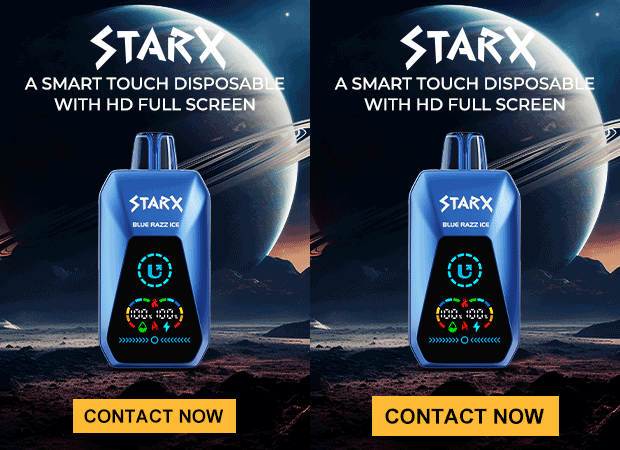
The actual energy difference is governed by the device's operational logic. A well-engineered vape with screen does not remain fully active at all times. It utilizes power management protocols where the display activates only upon user interaction, such as a puff or a button press, and then returns to a low-power or sleep state after a short interval. This intermittent operation ensures that the screen's total energy draw over a usage cycle is a small fraction of the power consumed by the heating coil. The system is designed so that the functional benefit of the display—providing clear data—justifies its minimal and managed power cost.
The Net Effect on Overall Device Performance and Design
When analyzed as part of the whole system, the energy consumption of an LED screen is a optimized variable. Its inclusion supports a more efficient user experience by preventing wasted puffs from an empty tank or a depleted battery, thereby conserving the device's total energy. For distributors, this translates to a product that maintains a competitive battery life while offering a premium, informative interface. The technological choice of an LED screen reflects a commitment to balanced performance, where the energy expenditure provides a direct return in user control and product reliability.
The integration of an LED display represents a calculated compromise in power allocation. The consumption difference is mitigated by the technology's innate efficiency and sophisticated power-cycling firmware. For a B2B partner, this means offering a device where the advantages of a clear, digital interface do not come at the expense of practical battery performance. It is an example of how thoughtful engineering can deliver enhanced functionality within the constraints of a compact power system.



 +86 188 9873 6271
  info@upends.com
  www.upends.com
  Flat/Rm 1201, 12/F, Tai Sang Bank Building 130–132 Des Voeux Road Central Central, Hong Kong


