

 12th Nov 2025
 172
172 Andrew




20th Nov 2025
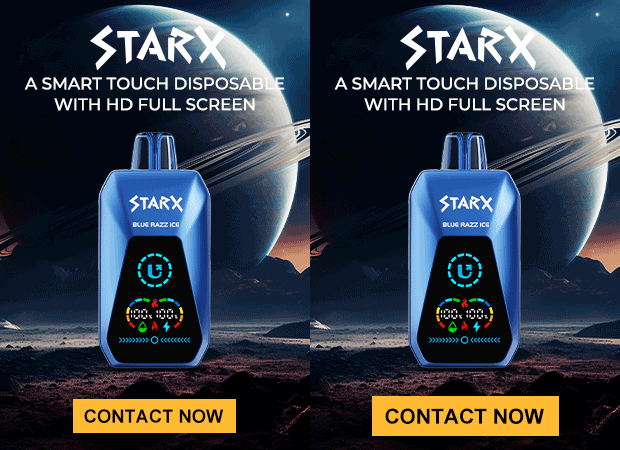
Behind the seamless glide of a finger across a modern device lies a core component that makes it possible. At UPENDS, we consider the chipset the operational center of a vape with a touch screen. This microelectronic board does far more than regulate power; it functions as a sophisticated interpreter, translating user touch into precise device commands. The quality of this component directly defines the reliability and responsiveness of the entire interactive experience on vapes with touch screens.

Processing Touch Input and Gesture Recognition
The primary role of the chipset in a vape with touch screen is to manage the constant stream of data from the display's touch-sensitive layer. It must rapidly and accurately distinguish between an intentional tap, a sustained press, and a swiping gesture. This requires a dedicated processor with algorithms designed to filter out accidental contact and environmental interference. A less capable chipset can result in a laggy response or misinterpreted commands, which fragments the user experience. The chipset ensures that every interaction on your vape with the touch screen feels immediate and intentional, maintaining the illusion of a direct manipulation of the device's functions.
Power Management and System Integration
A responsive vape with a touch screen requires harmonious coordination between the display, the touch sensor, and the heating element. The chipset acts as the central nervous system for this integration. It allocates power efficiently, ensuring the screen receives stable voltage for consistent brightness and clarity without depriving the coil during activation. Furthermore, it processes the user's wattage or temperature adjustments made via the touch interface and instantaneously recalibrates the power output to the atomizer. This synchronicity between user input through the vape with touch screen and the resulting physical output is a direct function of the chipset's integrated circuit design and its firmware programming.
Enabling Firmware Updates and Feature Expansion
The advanced architecture of a modern chipset provides a foundation for growth beyond its initial capabilities. Unlike static hardware, a sophisticated chipset in a vape with screen can support firmware updates. This means the user interface, gesture controls, and even safety features can be refined and enhanced after the product has left the factory. For business partners, this translates to a product with an extended lifecycle. The functionality of the vape with a touch screen can evolve, allowing you to offer new software-based features without a complete hardware redesign, thereby protecting your inventory from premature obsolescence and adding long-term value for the end-user.
The interactive features of a vape with a touch screen are not solely a product of the glass display itself. They are enabled by the computational power, electrical efficiency, and systemic integration provided by the chipset. This component is responsible for the accuracy of touch recognition, the stability of the power delivery system, and the potential for future enhancements. Investing in a device built around a capable chipset is, therefore, a commitment to providing a seamless and durable user interaction, solidifying the product's reputation for quality and technological competence.



 +86 188 9873 6271
  info@upends.com
  www.upends.com
  Flat/Rm 1201, 12/F, Tai Sang Bank Building 130–132 Des Voeux Road Central Central, Hong Kong


