

 11th Nov 2025
 172
172 Andrew




20th Nov 2025
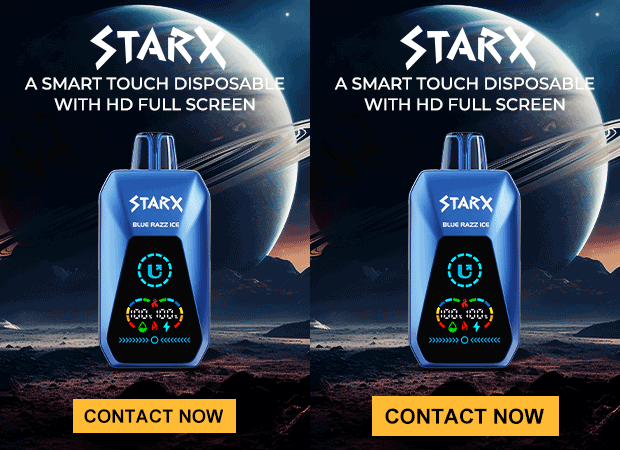
Screen resolution acts as a primary variable in the manufacturing equation for a modern vaping device. For us at UPENDS, selecting the appropriate display for a vape with a screen involves a careful analysis of how pixel density influences not just the initial component cost, but also the entire production process. The relationship between resolution and final product cost is direct and multi-faceted, impacting material quality, assembly complexity, and power management systems.

The Direct Correlation Between Pixel Density and Component Quality
A fundamental factor in display cost is the quality of the underlying materials. A higher-resolution screen for a vape with a screen requires a more sophisticated glass substrate and more precise manufacturing of the liquid crystal or OLED layer to pack a greater number of pixels into the same physical space. This demands superior raw materials and more stringent factory calibration to ensure consistency and longevity. These material upgrades represent a significant portion of the increased cost, as they are essential for achieving clarity, color accuracy, and a display that resists fading or dead pixels over the device's lifespan.
Implications for Assembly Precision and Production Yield
Integrating a high-resolution display introduces greater complexity into the assembly line. The tolerances for alignment are much tighter; a minuscule misalignment can be visibly apparent on a dense pixel array, leading to a perceived defect. This requires more sophisticated robotic placement systems and enhanced quality control protocols, including individual unit testing. Consequently, the production time per unit increases, and the potential for units failing inspection can rise, affecting the overall manufacturing yield. This operational overhead is a critical, though often unseen, contributor to the final cost of a high-resolution vape with screen.
The Downstream Impact on Device Power Architecture
A display with a greater number of pixels demands more power to illuminate them all. This creates a cascade effect on the device's internal design. To maintain a reasonable battery life, a higher-resolution vape with a screen often necessitates a larger, more capable battery cell and a more robust power management integrated circuit (PMIC). This component not only draws more current but must also regulate power flow with greater efficiency to prevent unnecessary drain. These supporting components add both material cost and engineering complexity to the overall device architecture, moving beyond the screen itself to influence the bill of materials for the entire unit.
The choice of screen resolution is therefore a strategic decision that balances market expectations with economic feasibility. A higher-resolution display in a vape with a screen elevates cost through superior materials, precise assembly requirements, and necessary enhancements to the power system. Understanding this cost structure allows our partners to make informed decisions about product positioning, targeting segments where superior display clarity is a recognized and valued differentiator that justifies the associated investment.



 +86 188 9873 6271
  info@upends.com
  www.upends.com
  Flat/Rm 1201, 12/F, Tai Sang Bank Building 130–132 Des Voeux Road Central Central, Hong Kong


