

 15th Nov 2025
 255
255 Andrew



20th Nov 2025
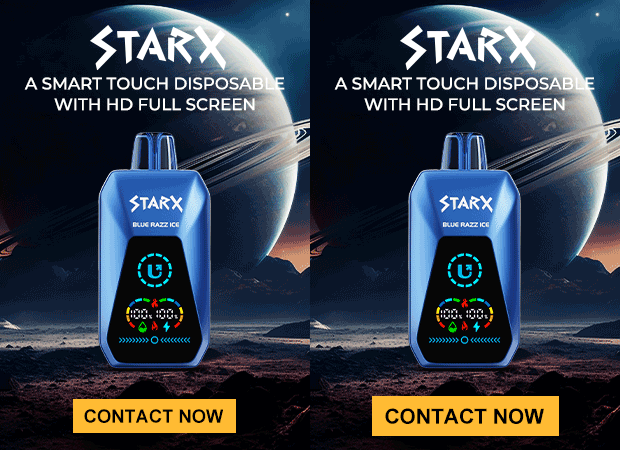
Electronic device performance fundamentally relies on the balance between feature functionality and energy allocation. This balance becomes critically important in the context of a smart screen vape, where the power-intensive nature of a continuous display directly challenges operational longevity. We at UPENDS approach this engineering challenge by viewing power efficiency as the central determinant of a device's practical value. A smart vape with sophisticated features becomes functionally compromised if its battery cannot support reasonable daily use. Therefore, the role of low-power consumption transitions from a technical specification to a core prerequisite for user satisfaction and product reliability in this device category.

Display Technology and Power Allocation
The visual interface of a smart screen vape represents the most significant passive energy drain within the device's system. Different display technologies possess varying power requirements, with brightness levels and refresh rates directly influencing total energy draw. An inefficient display can disproportionately consume the allocated energy budget, leaving limited power for the essential vaporization functions. Our development process involves selecting display components that provide clear visibility while operating within strict power parameters, ensuring that the screen enhances rather than diminishes the overall utility of the smart vape.
Battery Chemistry and Discharge Characteristics
The relationship between power consumption and battery lifespan involves complex electrochemical principles. Lithium-based batteries experience capacity degradation through repeated charge-discharge cycles, with high-drain applications accelerating this degradation process. A smart screen vape designed with high power consumption will not only provide shorter usage periods between charges but will also necessitate more frequent charging cycles. This pattern ultimately reduces the overall service life of the battery and, by extension, the device itself. Our engineering focus includes optimizing the entire system's power draw to maintain stable discharge characteristics and preserve long-term battery health.
Thermal Management and System Efficiency
High power consumption within electronic systems inevitably generates excess thermal energy. In a compact device like a smart vape, this heat must be effectively managed to prevent component stress and maintain consistent performance. Excessive heat can affect battery efficiency, sensor accuracy, and the integrity of electronic circuits. By prioritizing low-power components and intelligent power management firmware, we reduce the thermal load on the device. This system-wide approach to efficiency ensures that the smart screen vape operates within optimal thermal parameters, contributing to both immediate performance and long-term reliability.
The imperative for low-power consumption in a smart screen vape extends far beyond simple battery life metrics. It represents a fundamental engineering principle that affects every aspect of device performance, from daily usability to long-term durability. A power-efficient design ensures that the advanced features of a modern smart vape remain practically accessible rather than theoretically possible. The development trajectory for these devices will continue to emphasize energy optimization as a primary goal, reflecting the industry's recognition that true innovation lies not only in adding features but in making them sustainably functional. Our commitment at UPENDS remains focused on this balance between technological advancement and practical power management.



 +86 188 9873 6271
  info@upends.com
  www.upends.com
  Flat/Rm 1201, 12/F, Tai Sang Bank Building 130–132 Des Voeux Road Central Central, Hong Kong


